How does mobile flat tire repair work in Pittsburgh?
You call with your location and the tire that went flat. A roadside truck comes to the car, jacks it, and fits your spare. If the damage is a nail or screw in the tread, a plug may get you to a shop. Sidewall damage means the tire has to be replaced.
Most flats on this line are a straight swap to the spare. The operator brings a jack rated for the car, a torque wrench and an air tank, so a full-size spare that has sat flat in the trunk for two winters can be filled before it goes on.
A plug is a repair for a puncture in the tread, away from the shoulder of the tire. It is a way to reach a tire shop, not a fix for the life of the tire. A gash in the sidewall, a tire that came off the bead, or a rim bent on a pothole all mean the tire is done. Then the choice is the spare, or a tow to a shop that has your size in stock.
What if I don't have a spare tire?
Plenty of newer cars carry a sealant kit instead of a spare. If the kit can't seal the hole, or there is no kit at all, the car usually needs a tow to a tire shop. Tell the operator up front so the right truck comes the first time.
Look under the trunk floor before you call. You'll find a full-size spare, a narrow temporary spare, a can of sealant with a small compressor, or nothing. Each one changes the job.
Run-flat tires are their own case. They are built to keep rolling for a short distance at low speed after a puncture, so you may be able to reach a lot or a quiet street before you stop. The owner's manual has the limit for your car.
Can a tire be changed on the Parkway or in a tunnel?
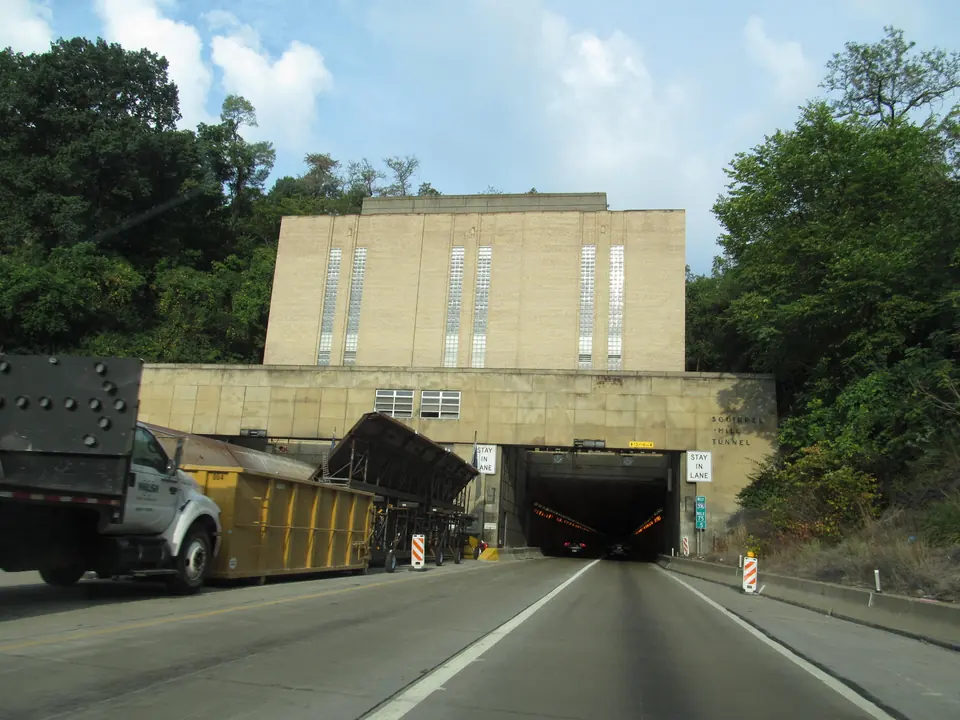
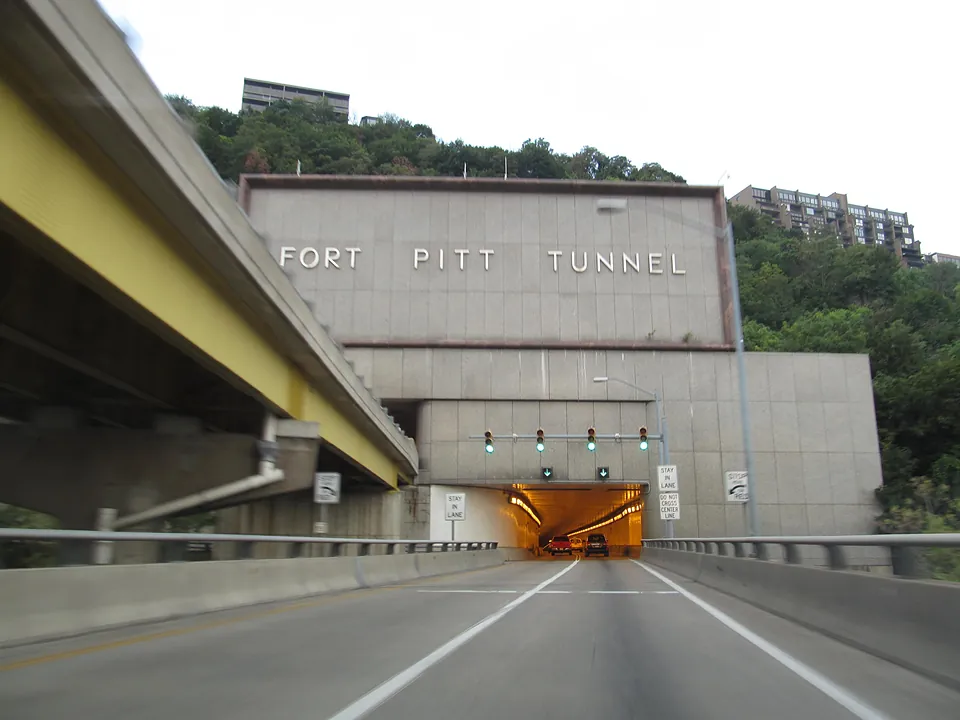
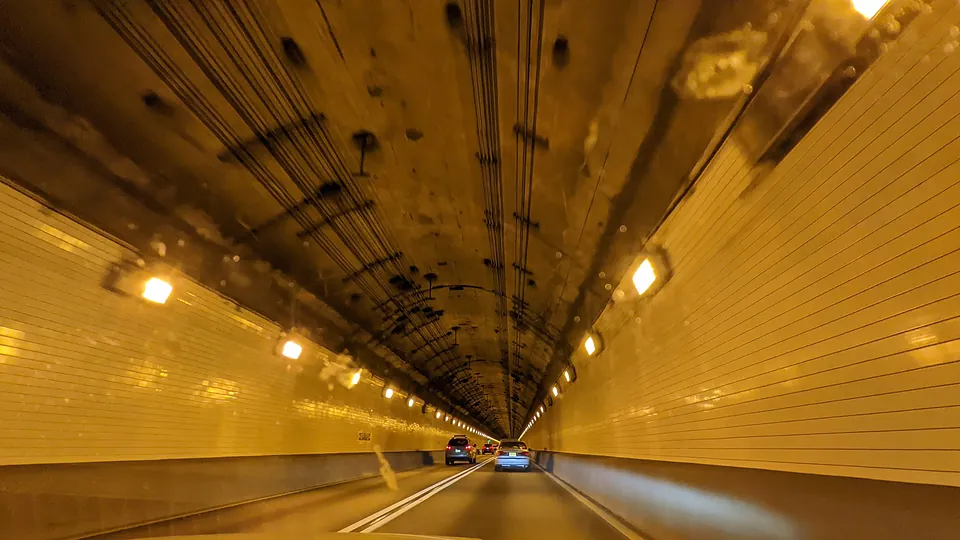
On a wide parkway shoulder with the flat on the right side, a tire change is often possible. A flat on the traffic side, a shoulder too narrow to work on, or a car stopped in a tunnel or on a bridge deck means the car gets moved first.
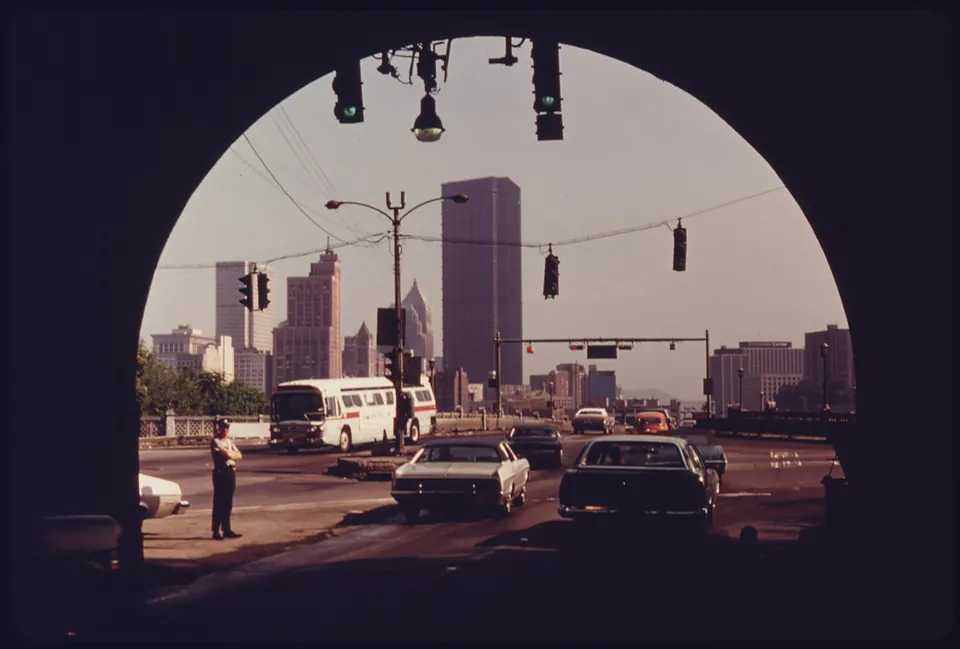
Pittsburgh is hard on this. The Parkway East and West run between rock cuts and retaining walls, and the shoulders shrink near the tunnels and the bridge approaches. The tunnel and bridge guide covers what to do when the car stops somewhere with no shoulder at all.
If the flat leaves you in a travel lane, call 911 first. Pennsylvania's Move Over law protects a disabled car that shows two of three markers: hazard lights, caution signs or triangles, and road flares. Hazards alone are one.
Why do Pittsburgh roads cause so many flat tires?
Freeze and thaw cycles open potholes across the city every winter, and steep streets push drivers into curbs and storm drains. A pothole hit at speed can bend a rim or pinch the tire against it. That damage often shows up as a slow leak a day later.
The pattern is familiar to anyone who drives here between December and April. Water gets into cracks, freezes, and lifts the pavement, and traffic breaks it apart. The City of Pittsburgh takes pothole reports through 311, and PennDOT handles the state routes.
If a tire loses air slowly after a hard hit, look at the inside edge of the rim. A bent lip can let air out past the bead even when the tread is fine.
What should I do while I wait for the tire change?
Get the car as far from traffic as you can, put the hazards on, and stay inside with your seat belt on if you're on a highway. On a city street or in a lot, wait somewhere you can see the car and be seen by the truck when it arrives.
Find your wheel lock key before the truck gets there. Many cars have one locking lug nut per wheel, and its key is usually in the glove box or with the jack. Without it, the wheel stays on.
Have the tire size ready if you can read it off the sidewall. A number like 225/60R17 tells a shop whether they can replace the tire today.
Can you fix a flat on a truck, van or SUV?
Light trucks, vans and SUVs are routine for a roadside tire change, as long as the spare and the jack points are reachable. Heavy duty pickups with dual rear wheels, box trucks and commercial vehicles need a heavier truck, so say the vehicle type on the call.
Spares under the bed of a pickup are lowered on a cable that rusts in salted winters. If it won't come down, the operator may need to cut the cable or tow the truck to a shop.
Trailers are a separate job. Say if the flat is on the trailer, not the tow vehicle.
How do I know if a tire can be plugged or must be replaced?
A tire can usually be plugged when the hole is a small puncture in the tread from a nail or screw and the tire was not driven flat for long. Damage in the sidewall or shoulder, a cut, a bulge, or a tire driven flat on its rim means it has to be replaced.
Driving on a flat, even for a short stretch to an exit, crushes the sidewall from the inside. The outside can look fine while the cords are broken. That is why the operator asks how far the car went after the tire lost air.
Look for a bubble on the sidewall, cords showing through the rubber, or a crack around the rim. Any of those means the spare goes on and the tire goes to a shop.
When is a tow better than a tire change?
A tow is the better call when the wheel is damaged, there's no usable spare, or the car is somewhere a tire can't be changed safely. A tow to a tire shop also makes sense if two tires are flat after a pothole hit.
The operator will say so on the first call if the description points that way. Asking up front costs nothing and avoids a second truck. For a tow, decide where the car is going before it is hooked up: a tire shop that is open, your own mechanic, or home. The towing page covers the details.
For battery and fuel trouble on the same trip, see mobile battery replacement and fuel delivery.