What counts as an emergency roadside call?
Any time the car can't go on and you're stuck where you are: a breakdown on the parkway, a car slid into a ditch or a snowbank, keys locked inside, or a stall late at night. If anyone is hurt or a travel lane is blocked, that is a 911 call first.
Emergency here means the driver is stranded, not that the repair is big. A dead battery at a gas station at two in the morning is an emergency to the person standing next to it. So is a car that slid off a South Hills street into a yard.
The first question on the call is always where you are. The second is if you're safe. Everything else follows.
Can you help if I locked my keys in the car?
Yes. Say the make, model and year, and whether a child or a pet is inside. A locked car with a child or an animal inside on a hot or cold day is a 911 call; police and fire crews open cars for that reason.
For an ordinary lockout, the operator opens the door with tools made for it, without breaking glass. Have proof that the car is yours ready. A registration in the glove box counts, since you'll be able to reach it once the door is open, and the operator will ask to see it.
Keys locked in the trunk are harder on some cars. Push-button start cars that lock themselves with the fob inside are common now; say so on the call.
What if my car slid off the road or got stuck?
A car with two or more wheels off the pavement, in a ditch, a snowbank or soft ground usually needs a winch to pull it back onto a hard surface. Tell the operator how far off the road the car is and which wheels are stuck.
Pittsburgh's hills make this a winter regular. A car parked on a steep street can slide sideways on ice into the curb and stay there. On the parkways, a car that left the road in snow may sit in a drainage swale below the shoulder.
Don't spin the tires to get out. It digs the car deeper and can burn the transmission. Shut it off, put the hazards on and wait off the road if you can do that safely.
What does 24 hour roadside assistance mean on this line?
It means you can call at any hour and talk to someone who can send help or say honestly when help can come. Nights, weekends and holidays are when most people need it, because shops are closed and a friend with cables is asleep.
If a truck is available, the operator will say so. If every truck is out, you'll hear that too, so you can decide whether to wait, call a friend, or have the car towed in the morning.
Late at night, keep the doors locked and the hazards on while you wait. If you feel unsafe where you're stopped, call 911.
What should I do if my car breaks down on the Parkway?
Steer to the right shoulder as far from the white line as you can, put the hazards on and stay inside with your seat belt fastened. Call 911 if you're in a travel lane. Then call for roadside help with the direction and the last exit you passed.
Parkway traffic runs close to the shoulder through the rock cuts. Standing beside the car is the most dangerous place to be. If you have to get out, go away from traffic and stand behind the guardrail.
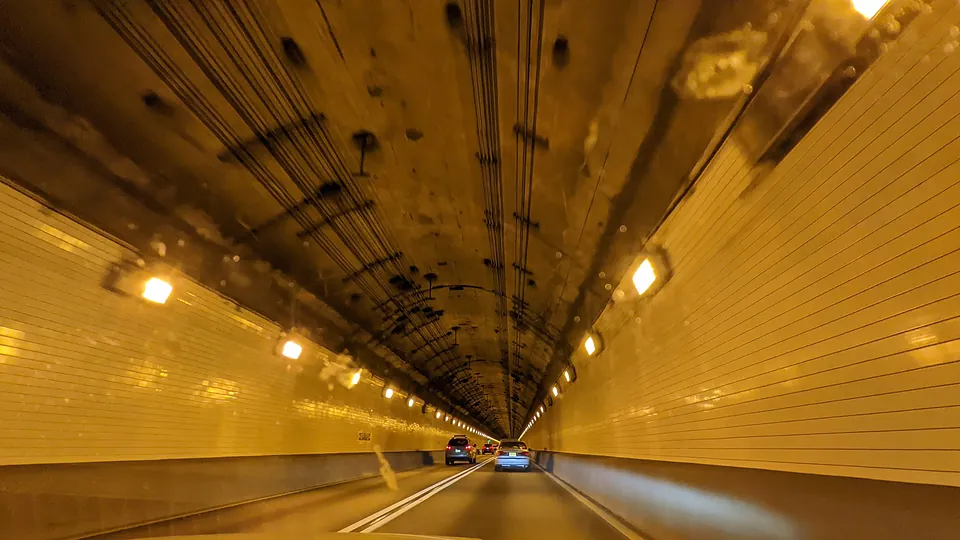
PennDOT's 511PA site and the 511 phone line show lane closures and crashes. If the tunnel ahead is closed, tell the operator so the truck comes the other way. The tunnel and bridge guide has more.
Can the car be fixed on the spot or does it need a tow?
Flat tires, dead batteries, empty tanks and lockouts are usually handled where the car stands. Engine, transmission, brake and cooling problems almost always need a tow to a shop. The operator will tell you which on the call.
Describe what you see and hear: a warning light, steam from under the hood, a grinding noise, a smell. That's enough to decide between a roadside fix and a tow.
For the common fixes in detail, see flat tire repair, battery replacement and jump starts and fuel delivery.
What if my car overheats in tunnel traffic?
Turn off the air conditioning, turn the heater to full hot to pull heat away from the engine, and watch the gauge. If it reaches the red or steam appears, pull over as soon as it is safe and shut the engine off. Never open a hot radiator cap.
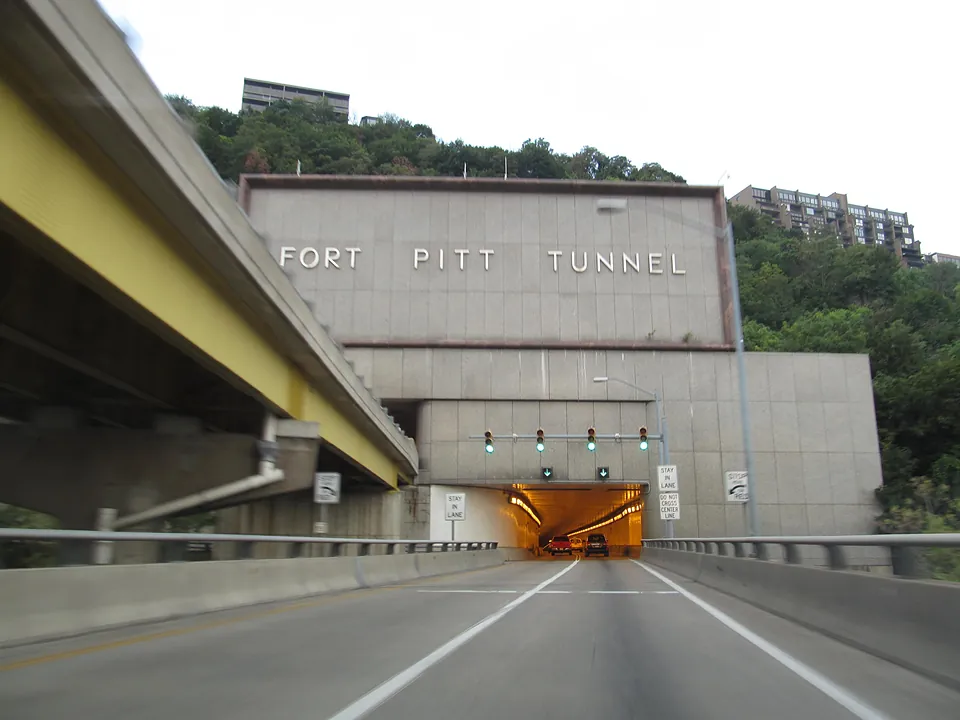
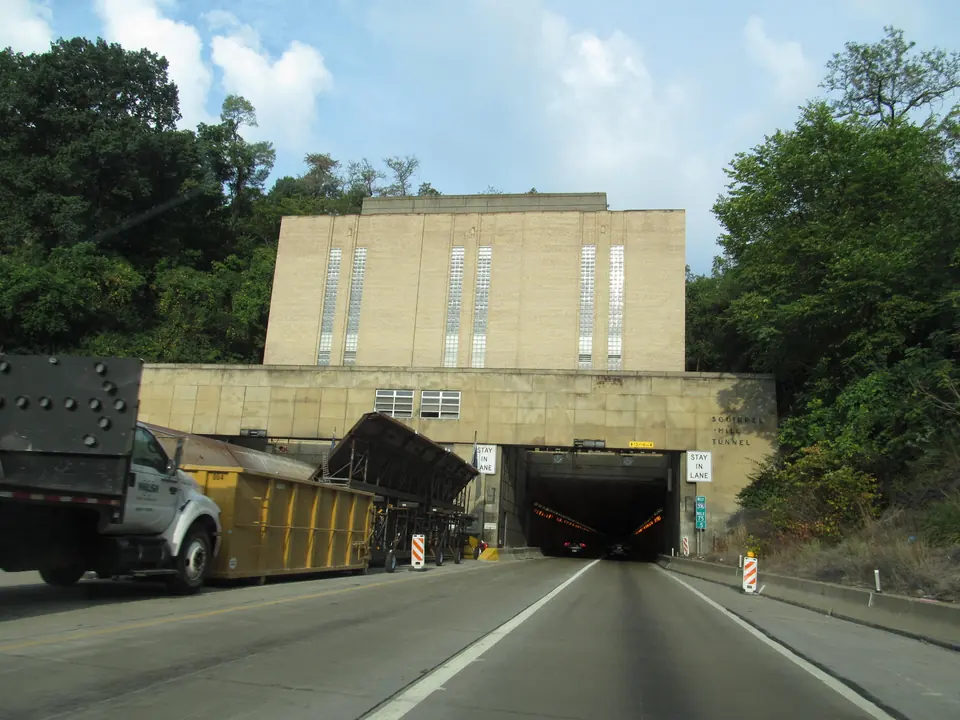
Stop and go traffic at the Fort Pitt and Squirrel Hill tunnels is where a weak cooling system gives up, because the car crawls with little air moving through the radiator.
Let the engine cool before anyone looks under the hood. A car that overheated badly usually needs a tow to a shop rather than a top up of coolant on the shoulder.
What details speed up an emergency roadside call?
Your exact location, the direction of travel, the make, model and color of the car, what happened, and a callback number. If you're on a parkway, read the nearest exit number or mile marker sign. In the city, give the cross street.
A phone's map app can show your position. Read out the road name it shows rather than a guess. If the battery on your phone is low, say your callback number first.
Tell the operator if you're alone, if children are in the car, or if the car is somewhere a truck will struggle to reach, like a steep alley or a garage.
What should I keep in the car for a Pittsburgh winter?
A phone charger, a warm layer, gloves, a flashlight, an ice scraper and a bag of cat litter or sand for traction will cover most winter stalls. Jumper cables and a reflective triangle help the person who comes to help you.
Keep the tank above a quarter in cold weather. A car idling for heat burns fuel faster than people expect, and a cold tank collects water.
A triangle placed behind the car, together with the hazard lights, gives you two of the three markers Pennsylvania's Move Over law looks for.